FREE LARGE PROJECT CONSULTATION
CLICK HERE to schedule an appointment with our lighting expert.
5% OFF ANY ORDER Use Code: SUPER5OFF

Indoor vs Outdoor Specialty Lighting: Which Is Right for You?
Not all lighting is created equal. Specialty lighting is designed to achieve specific effects, enhancing aesthetics, improving safety, or supporting functional needs. Whether you are working on interiors, landscapes, or commercial activations, selecting the right fixtures means balancing style, performance, and long-term efficiency. This guide helps developers, designers, and facility managers compare indoor and outdoor specialty lighting, understand key material and rating differences, explore practical fixture options, and discover emerging trends like smart and biophilic lighting. By the end, you will know how to choose LED and outdoor fixtures that meet IP and UL standards while supporting your project goals and energy plans.
What Are the Key Differences Between Indoor and Outdoor Specialty Lighting?
Indoor and outdoor specialty lighting differ primarily in design intent, environmental resilience, functional priorities, and regulatory requirements, with indoor fixtures optimized for color rendering and ambiance while outdoor fixtures prioritize ingress protection and durability. Indoor lighting emphasizes color temperature for interiors and high CRI to render finishes and merchandise accurately, which benefits retail and hospitality spaces. Outdoor lighting must meet IP ratings for outdoor lighting and often UL-listed outdoor fixtures standards to resist moisture, dust, and impact while delivering security and wayfinding functions. Understanding these distinctions clarifies why fixture housings, gaskets, lenses, and mounting systems vary significantly between contexts.
How Do Design and Material Requirements Differ for Indoor vs Outdoor Lighting?
Design and material selection diverge because indoor fixtures prioritize finish options and optical quality while outdoor fixtures require corrosion resistance, gasketing, and UV-stable components to survive exposure. Indoor specialty lighting often uses polished metals, custom glass, and delicate trim pieces to achieve specific aesthetic integrations in retail or gallery environments; these materials focus on finish longevity under controlled conditions. Outdoors, housings made from die-cast aluminum or stainless steel with powder coatings, tempered glass, and silicone gaskets prevent water ingress and corrosion, and these material choices extend fixture lifespan in wet or coastal environments. Choosing the right material reduces maintenance and preserves the intended visual effect, which leads logically to standards that define acceptable field performance.
What Are the Safety and Energy Efficiency Standards for Indoor and Outdoor Lighting?
Safety and energy metrics differ because outdoor fixtures must meet minimum ingress protection and listing requirements, while indoor selections emphasize luminous efficacy and color accuracy for occupant comfort. IP ratings (e.g., IP44 for covered porches, IP65 for exposed facades) specify protection against solids and liquids, and UL listings indicate compliance with safety testing for wet or dry locations; these are essential when specifying LED specialty lighting for exteriors. Energy-efficient outdoor lights typically focus on lumens-per-watt and integrated LED modules with high driver efficiencies to reduce operating costs, while interior fixtures balance lumens, CRI, and color temperature for human-centric lighting. Interpreting these standards on spec sheets ensures fixtures meet both code and operational targets before moving into fixture selection and use-case matching.
What Types of Specialty Lighting Are Best Suited for Indoor Applications?
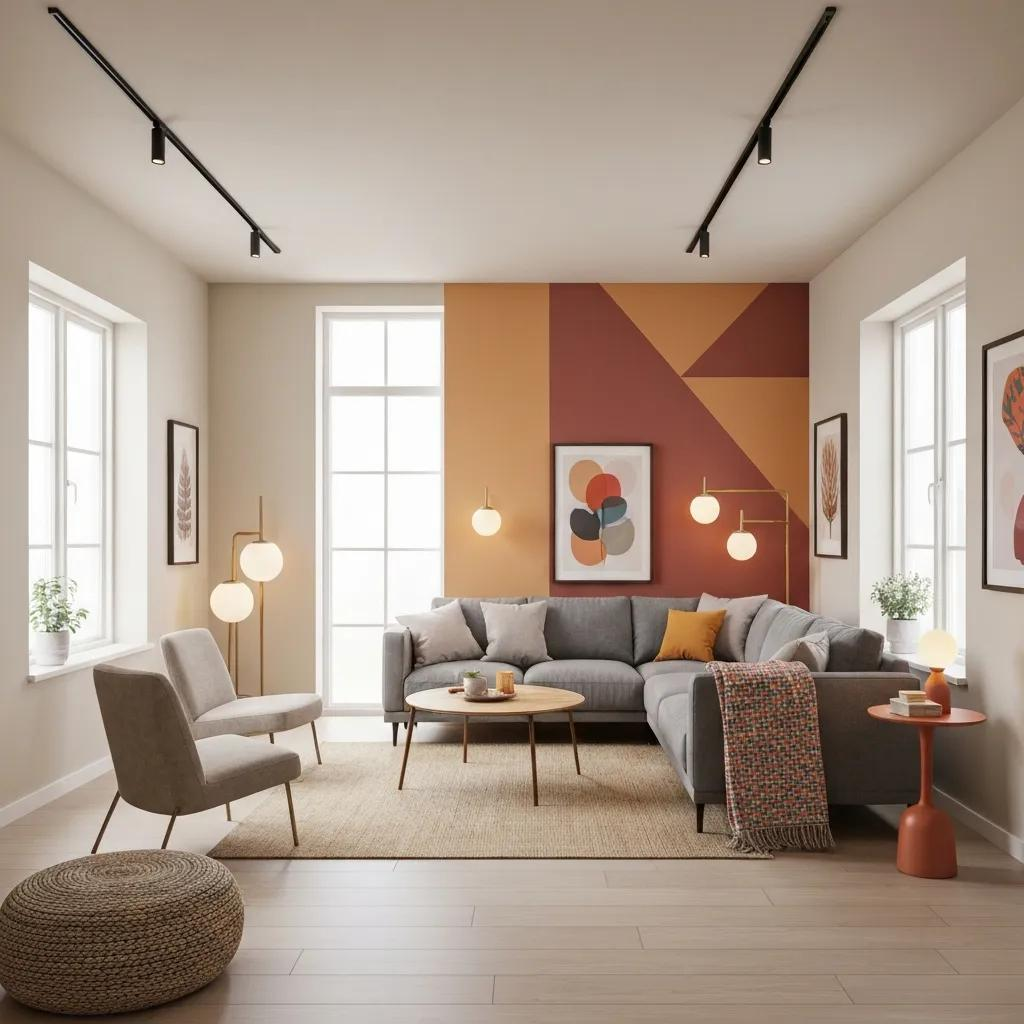
Indoor specialty lighting includes ambient, task, accent, and gallery/art lighting, each designed to achieve a specific visual or functional outcome through controlled color temperature for interiors, CRI selection, and focused optics. Ambient solutions provide overall mood and wayfinding, task lighting supports detailed work, accent lighting highlights objects or architectural features, and art lighting preserves color fidelity. Selecting between recessed, pendant, track, and wall-washer systems depends on ceiling heights, material finishes, and integration with controls for scene-setting. These fixture categories inform choices for hospitality, retail, office, and residential projects and set the stage for precise fixture recommendations below.
Which Indoor Lighting Fixtures Enhance Ambiance, Task, and Accent Needs?

Different indoor fixtures match specific use-cases: pendants and cove systems create ambient warmth, under-cabinet and directional recessed fixtures provide task clarity, and track or picture lights deliver adjustable accent illumination. Ambient fixtures such as dimmable pendants and cove LEDs benefit from color temperature ranges from warm 2700K to neutral 3500K to shape the mood without overwhelming the space. Task fixtures focus on higher lumen output and tighter beam control with CRI 90+ where color-critical tasks occur, while accent fixtures use narrow beams and adjustable heads to model texture and form in retail or gallery settings. Choosing fixtures with compatible dimming and controls enables dynamic scenes that enhance aesthetics and productivity, which naturally leads to an example fixture reference table for interior planning.
Different indoor fixtures provide clear trade-offs between visual quality, installation complexity, and maintenance; the following table helps designers match fixture types to performance parameters.
| Fixture Type | Typical Use Case | Color Temp Range (K) | Typical Lumens | Recommended CRI |
|---|---|---|---|---|
| Pendant / Chandelier | Ambient in lobbies, dining | 2700–3500 | 800–3000 | 90 |
| Recessed Downlight | General and task lighting | 2700–4000 | 700–2500 | 80–90 |
| Track Lighting | Flexible accent and retail | 2700–4000 | 300–2000 per head | 90 |
| Under-Cabinet / Linear | Task in kitchens and workstations | 3000–4000 | 400–1200 | 90 |
This fixture reference clarifies how color temperature and CRI align with common interior applications and supports informed selection for design goals.
What Are the Most Effective Outdoor Specialty Lighting Solutions?

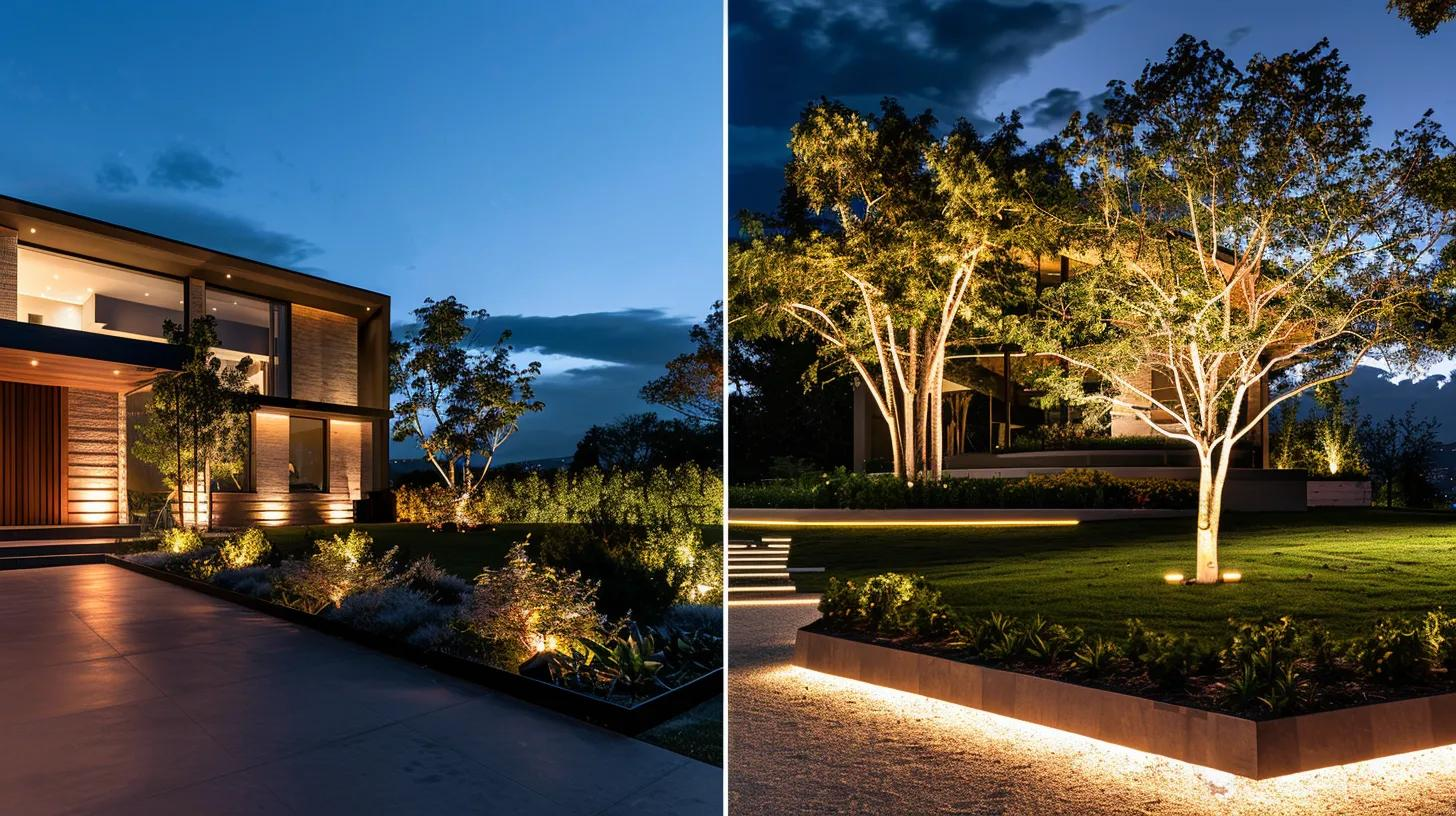
Outdoor specialty lighting solutions focus on security lighting, landscape lighting solutions, and architectural lighting for facades, with each application requiring specific lumen outputs, control strategies, and appropriate IP ratings. Security-focused fixtures prioritize high lumen output with motion sensors and shielding to avoid glare, while landscape fixtures emphasize low-voltage spots, path lights, and well lights to guide and shape outdoor experiences. Architectural façade lighting uses linear washes, uplights, and controlled accenting to enhance material texture and brand visibility during evening hours. Proper placement, shielding, and glare control reduce complaints and improve the perceived safety and aesthetics of outdoor spaces.
Which Outdoor Fixtures Provide Security, Landscape, and Architectural Lighting?
Outdoor fixture categories serve distinct roles: flood lights and wall packs with motion sensors deter intrusion, path lights and bollards deliver safe navigation, and linear washes and uplights sculpt facades for branding and wayfinding. Security fixtures often require IP65 or higher and integrated motion or dusk-to-dawn controls to conserve energy while providing high peak output when needed. Landscape lighting solutions typically use lower lumen outputs with warm color temperatures to retain natural appearance and rely on low-voltage systems for ease of maintenance. Architectural fixtures demand precise optics and often higher IP and IK ratings to ensure even illumination across materials, which leads to considerations for material durability and lifecycle planning.
The following list summarizes common outdoor fixture roles and a one-line benefit for each.
- Flood lights (Security): Provide high-intensity coverage and integrate with motion sensors to deter trespassers.
- Path Lights / Bollards (Wayfinding): Improve safety and circulation with low-glare, low-level illumination.
- Linear Washes / Façade Uplights (Branding): Accent building forms and enhance night-time visibility for marketing activations.
How Do Weather Resistance and Durability Impact Outdoor Lighting Performance?
Weather resistance and durability determine lifecycle costs because fixtures exposed to rain, salt, or impact face accelerated failure without appropriate materials and seals. IP and IK ratings quantify protection against moisture and mechanical damage, while coatings and substrate selection protect against corrosion in coastal or industrial settings. Higher upfront investment in sealed housings and robust drivers often reduces replacements and unscheduled maintenance, yielding lower total cost of ownership for developments and large-scale installations. Planning for maintenance access and warranty provisions completes a resilient outdoor lighting strategy, which then informs the decision framework for project selection.
How Do You Choose the Right Specialty Lighting for Your Residential or Commercial Project?
Choosing the right specialty lighting requires assessing project needs, budgeting for lifecycle costs, and aligning fixture performance with aesthetic and operational goals in a structured decision process. Begin by defining functional requirements—security, display, ambiance—then map those to technical targets like lumens, CRI, color temperature, IP/UL ratings, and controls. Budget discussions should weigh upfront fixture and installation costs against energy-efficient LED specialty lighting and simplified maintenance, which often deliver payback through lower operating expenses. This framework prepares project teams to decide when to scale specifications up for commercial robustness or scale back for residential simplicity, and it naturally raises the question of when specialist involvement becomes necessary.
What Factors Should Influence Your Lighting Choice: Budget, Function, and Aesthetic Goals?
Prioritize a clear scoring approach that quantifies budget, function, and aesthetics to guide fixture selection and control strategies, ensuring decisions align with stakeholder objectives. Assign weights to lifecycle cost, energy efficiency (lumens-per-watt), compliance needs (IP/UL), and visual outcomes (color temp and CRI), then score candidate fixtures against those criteria to highlight trade-offs. Remember to include installation complexity and maintenance access in the total cost calculation because these variables materially affect long-term operating budgets. A quantified checklist simplifies stakeholder approvals and links design choices to measurable outcomes such as reduced energy spend or improved customer dwell time.
When Should You Consult a Lighting Specialist for Development or Marketing Projects?
Complex developments, commercial activations, and projects needing measurable ROI benefit from early specialist involvement. Experts can model energy savings, verify UL and IP compliance, and design lighting that enhances branding while minimizing light trespass. Early engagement prevents costly rework and ensures smart lighting and controls integrate seamlessly.
At Light Disty, we offer full consulting, design, and implementation services for indoor and outdoor specialty lighting. Our team delivers energy-efficient, compliant, and aesthetically tailored solutions that support development and marketing objectives. Contact us to explore how we can bring your project goals to life.
What Are the Emerging Trends and Advanced Applications in Specialty Lighting?
Emerging trends in specialty lighting for 2024–2025 emphasize smart lighting integration, IoT-enabled controls, sustainable materials, and biophilic lighting solutions that support occupant well-being and marketing flexibility. Smart lighting platforms enable remote scene-setting, scheduling, and analytics that inform operational efficiency and visitor engagement, while sustainable fixtures and solar-powered options reduce embodied carbon and operating emissions. Biophilic lighting solutions use daylight harmonization and circadian-friendly color temperature strategies to improve occupant health and productivity in workplaces and hospitality environments. These trends expand how lighting contributes to brand storytelling and long-term asset value.
How Is Smart Lighting and IoT Integration Transforming Specialty Lighting?
Smart lighting and IoT enable automated schedules, scene control, sensor-based dimming, and data-driven insights for both operations and marketing. Retail and marketing projects use dynamic scenes to increase engagement, while developers reduce energy through occupancy and daylight harvesting. Key considerations include protocol compatibility, cybersecurity, and scalability for consistent brand presentation.
At Light Disty, we design and implement advanced smart lighting, IoT, and biophilic solutions tailored to development and marketing projects, combining innovation with measurable results.
What Sustainable and Biophilic Lighting Solutions Are Shaping New Developments?
Sustainable and biophilic solutions combine efficient LED specialty lighting, daylighting strategies, and materials with low embodied impact to create healthier, lower-energy buildings that perform well in development master plans. Solar-powered fixtures for remote landscape lighting and recycled-material housings reduce lifecycle environmental impact, while circadian-aware interior lighting uses tunable white LEDs to support occupant sleep-wake cycles. Developers should specify performance metrics, efficacy, driver longevity, and material recyclability so procurement decisions reflect sustainability goals and maintenance plans. These measures improve tenant satisfaction and can be quantified in energy models to support development approvals, leading into practical methods for comparing technical specifications in datasheets.
How Can You Compare Indoor and Outdoor Specialty Lighting Specifications Effectively?
Comparing specifications effectively requires understanding key attributes—color temperature, lumens, watts, CRI, IP rating, and UL listing and using structured EAV-style comparisons to evaluate fixtures against project criteria. Color temperature for interiors guides mood and brand expression, lumens relate to perceived brightness, and lumens-per-watt indicates efficiency. IP and UL ratings indicate suitability for exposure and compliance, while driver quality and LED module architecture affect long-term lumen maintenance. A checklist and table-based approach simplifies supplier proposals and enables apples-to-apples comparisons for procurement and specification.
What Are the Key Technical Attributes: Color Temperature, Lumens, and Power Consumption?
Color temperature (Kelvin) controls perceived warmth or coolness of light and should be selected according to use case: warm 2700–3000K for hospitality ambiance, neutral 3000–3500K for retail, and cooler 4000K+ for security and task-heavy areas. Lumens quantify visible output while watts measure power draw; comparing lumens-per-watt (efficacy) reveals true efficiency differences between LED specialty lighting options. CRI measures color rendering and is especially important in retail, art, and medical settings where accurate color perception matters. Understanding these attributes equips specifiers to set performance targets and request consistent datasheet information, which pairs with IP/UL guidance in the next subsection.
The following table helps compare practical fixture examples using an EAV-style structure to assist decisions.
| Fixture Example | Attribute | Value |
|---|---|---|
| Path Light | IP Rating | IP65 |
| Floodlight (Security) | Lumens | 12,000 lm |
| Recessed Downlight | CRI | ≥90 |
| Façade Linear Wash | Color Temp Options | 2700K–4000K |
How Do IP and UL Ratings Affect Fixture Selection and Installation?
IP and UL ratings determine a fixture’s environmental suitability and safety. IP44 works for splashed water, while IP66/IP67 is required for exposed, pressurized conditions. UL listings indicate suitability for wet, damp, or dry locations and guide mounting and wiring. Always verify manufacturer-rated IP and UL claims on datasheets to avoid costly retrofits and ensure reliable performance.
Quick Checklist for Spec Sheets
- Confirm IP and UL ratings match the site environment
- Compare lumens-per-watt for energy efficiency
- Verify CRI and color temperature for the intended application
At Light Disty, we provide bespoke lighting design and project proposals for development and marketing clients, ensuring solutions meet technical requirements and project goals. Contact us to explore tailored lighting options.
Conclusion
Choosing the right specialty lighting, whether indoor or outdoor, requires balancing aesthetics, functionality, safety, and energy efficiency. From fixture selection and material specifications to smart lighting integration and sustainability, every decision impacts performance, cost, and long-term results. At LightDisty.com, we specialize in designing and implementing tailored lighting solutions that meet these challenges. Our team helps developers, marketers, and facility managers create spaces that are visually striking, operationally efficient, and fully compliant. Contact us today to explore how bespoke lighting can elevate your next project and deliver measurable impact.