FREE LARGE PROJECT CONSULTATION
CLICK HERE to schedule an appointment with our lighting expert.
5% OFF ANY ORDER Use Code: SUPER5OFF

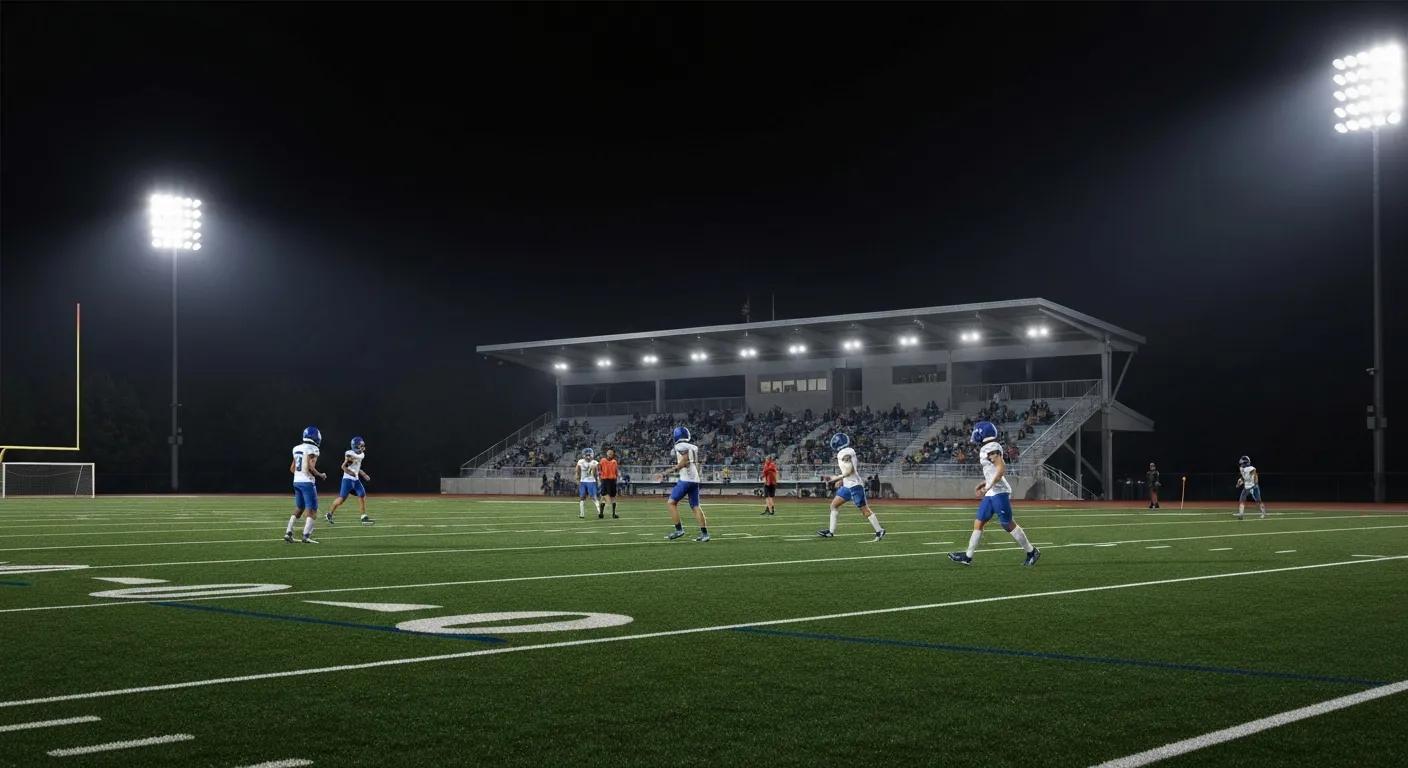
Benefits of Affordable LED Sports Lighting for Cost Savings and Performance
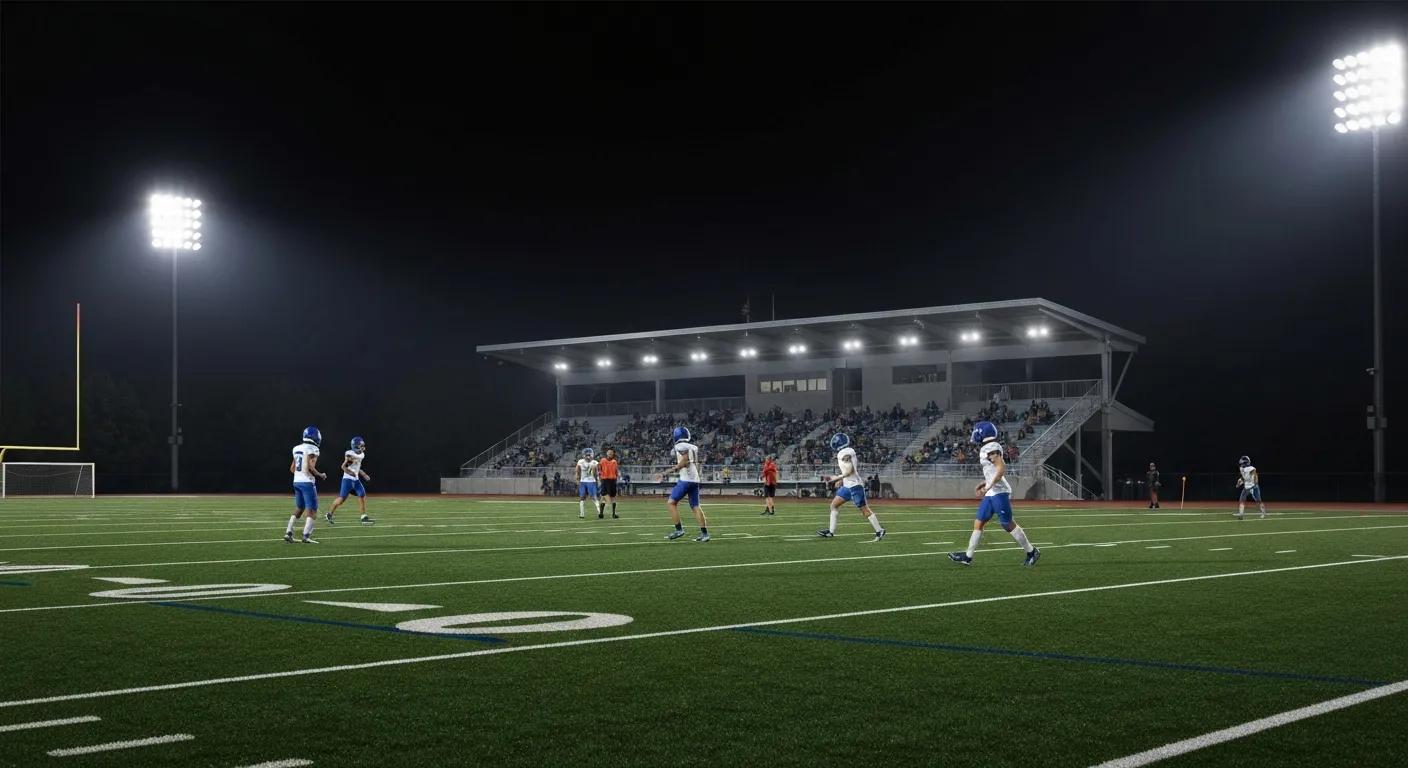
Affordable LED sports lighting offers a practical way for fields, courts, and stadiums to get brighter, more reliable light while keeping operating costs in check. Modern LED fixtures use energy more efficiently, direct light where it is needed, and last far longer than older metal halide systems. The result is lower electricity bills, fewer maintenance hassles, and better visibility for both players and spectators.
This guide breaks down the main benefits, the cost differences compared to traditional lighting, the impact on performance and sustainability, and the role of smart controls. It also includes simple examples that show how facilities can estimate savings and plan an upgrade with confidence. Let me know if you want it even shorter or more technical.
What Are the Key Benefits of Affordable LED Sports Lighting?
1. Lower Energy Use: LED fixtures convert more power into usable light, which cuts electricity consumption and reduces monthly operating costs.
2. Longer Lifespan: Quality LEDs last many years before needing replacement. This reduces maintenance work and limits the need for lifts, labor, and spare parts.
3. Better Light Quality: LEDs provide consistent brightness, high color accuracy, and even coverage across the field. Players see the ball and each other more clearly, and officials make more accurate calls.
4. Instant On and Off: Unlike older lamps that need a warm-up time, LEDs turn on at full brightness right away. This helps during practices, games, and unexpected schedule changes.
5. Improved Spectator and Broadcast Experience: Stable, flicker-free light looks better to fans inside the venue and on camera, especially for HD and 4K broadcasts.
6. Reduced Light Spill and Skyglow: Directional optics focus light on the playing surface, minimizing glare, neighborhood spill, and unnecessary upward light.
7. Lower Maintenance Costs: Fewer failures and predictable performance mean fewer service calls, less downtime, and more reliable scheduling for facilities.
8. Smart Control Compatibility: LED systems work well with dimming, scheduling, zoning, and remote monitoring. These controls create further energy savings and offer more flexibility for different events.
9. Better Safety for Athletes and Staff: Even lighting with minimal shadows improves visibility, reduces accidents, and helps maintain safe playing conditions.
10. Environmentally Friendly: LEDs contain no mercury, use less power, and require fewer replacements, which lowers the facility’s environmental footprint.
How Does LED Sports Lighting Deliver Significant Energy Savings?
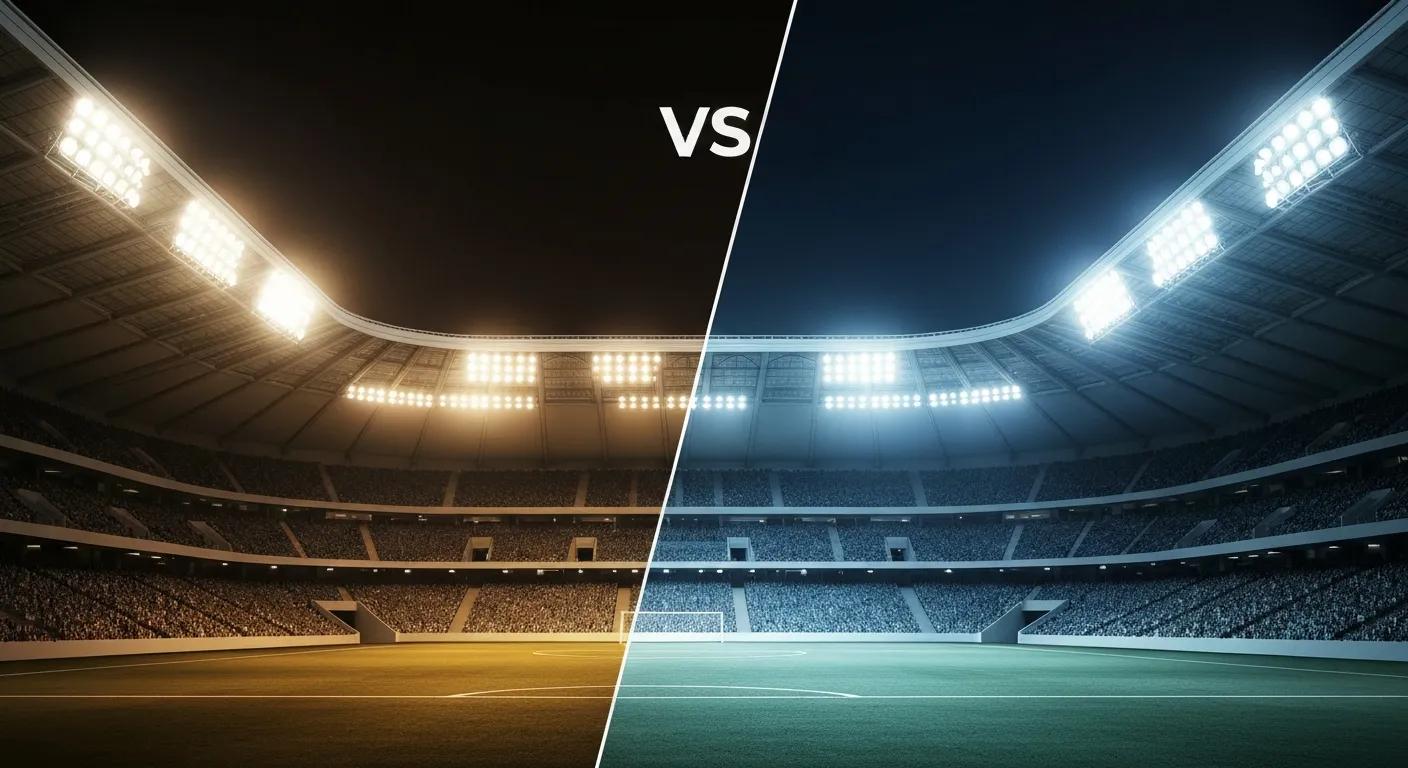
LED sports lighting delivers significant energy savings by producing more lumens per watt and directing light precisely where it is needed, which reduces overall fixture counts and run-time. The technology pairs high-efficacy LEDs with optics that cut spill and improve uniformity, and modern drivers support dimming and scheduling that lower consumption during non-peak periods. These mechanisms together typically yield electricity reductions that fall in a broad 50–80% range versus older metal halide or HID systems, depending on usage patterns and controls. Understanding these mechanisms helps facilities prioritize retrofit choices that maximize kWh savings and reduce operating budgets.
LEDs are more efficient for several technical reasons:
- Higher luminous efficacy: LEDs deliver more lumens per watt than traditional lamps, reducing required wattage.
- Directional optics: Fixtures target the play surface and minimize wasted uplight and spill.
- Advanced drivers and controls: Dimming, scheduling, and zone control cut energy when full output is unnecessary.
This combination of efficacy and control directly lowers electricity consumption and prepares the facility for further smart energy management.
What Makes LED Sports Lighting More Energy Efficient Than Traditional Systems?
LED sports fixtures achieve energy efficiency through a mix of component-level and system-level improvements that together reduce consumption and waste. At the component level, modern LEDs and drivers convert electrical energy to light far more efficiently than gas-discharge lamps, while heat-sinking and thermal management preserve lumen output over time. System-level improvements include precision optics that place light only where required, reducing the number of fixtures and lamp wattage needed for the same uniformity. Choosing outdoor area lights for athletic fields can further enhance efficiency and ensure consistent illumination across the playing surface. These features reduce overall run-time and energy waste, and they support integration with dimming schedules and sensors that further trim usage during practice or partial-event scenarios, which enhances lifetime energy savings.
How Much Can Sports Facilities Save on Electricity Bills with LED Lighting?
Savings depend on fixture selection, hours of operation, and local electricity rates, but switching from metal halide to LED commonly produces 50–80% lower energy consumption for equivalent on-field lux levels. For example, a community soccer field that previously used 60,000 watts total might drop to 12,000–30,000 watts after an LED upgrade; at 1,500 operating hours per year that can translate into tens of thousands of kWh saved annually. Switching from older metal halide systems to LED enables effective metal halide replacement, and facilities using lighting heavily for events and training see larger absolute savings, with dimming or scheduling multiplying reductions. Variability arises from installation scope, control strategy, and baseline system condition, but the dominant driver is lumens-per-watt improvement and reduced wasted light.
| Fixture Type | Typical Wattage (per system) | Typical Lumens | Estimated Efficiency (lm/W) |
|---|---|---|---|
| LED stadium floodlights | 12,000–60,000 W (system) | High (directional) | 100–160 lm/W |
| Metal halide systems | 30,000–100,000 W (system) | Moderate | 40–80 lm/W |
| HID (older fixtures) | 40,000–120,000 W (system) | Variable | 30–70 lm/W |
This comparison demonstrates how LED fixtures achieve higher lumen per watt at lower system wattages, which produces the bulk of electricity savings.
After reviewing energy mechanics and savings, many facilities pursue a deeper assessment of site-specific gains. Our services focus on delivering cost-effective, high-performance LED lighting solutions and include tailored energy-savings estimates for development and marketing projects. Requesting a customized estimate helps quantify local electricity rates, operational schedules, and control strategies so stakeholders can prioritize upgrades with the best return. A short assessment identifies the most impactful retrofit options and projects expected annual kWh reductions and cost savings.
What Are the Key Cost Savings from Reduced Maintenance and Longer Lifespan?
LED sports lighting provides significant LED lighting maintenance savings through substantially longer service life, lower failure rates, and fewer emergent outages that require labor-intensive repairs. With longer-lasting light sources and fixture-level robustness, venues need fewer lamp changes, fewer lift rentals or bucket hours, and fewer disruptive dark-field replacements that can conflict with schedules. These maintenance reductions translate to lower annual operating budgets and reduced downtime for fields and arenas. Quantifying maintenance savings alongside energy reductions provides a fuller picture of the total cost of ownership improvement.
Common maintenance savings emerge from several predictable mechanisms:
- Extended lamp life reduces replacement frequency and spare inventory.
- Lower failure rates cut emergency maintenance calls and event disruptions.
- Smart diagnostics and warranties often included with modern fixtures lower diagnostic time and repair costs.
How Does LED Lighting Reduce Maintenance Costs for Sports Facilities?
LED fixtures reduce maintenance costs by lengthening replacement cycles and simplifying diagnostics, which cuts labor hours and parts spending year over year. Typical LED lifespans eliminate the need for frequent lamp changes common to metal halide systems, and many LED fixtures include modular drivers and components that technicians can replace more quickly than older lamp-and-ballast assemblies. Remote monitoring and control features enable fault detection and predictive alerts that focus maintenance on real needs rather than reactive checks. Together, these changes reduce lift or scissor-lift rentals, scheduled downtime, and the labor hours associated with field darkening and relamping.
What Is the Typical Lifespan of Affordable LED Sports Lighting Compared to Traditional Lights?
Affordable LED sports lights commonly specify useful lifetimes in the 50,000–100,000+ hour range, depending on driver and thermal design, which far exceeds typical metal halide lamp lives of roughly 10,000–20,000 hours. This difference reduces replacement frequency by a factor of three to ten and lowers long-term fixture lifecycle costs. Warranties and robust thermal management add predictability to maintenance budgets, and fewer replacements reduce logistical burdens for large venues. Over a decade, the cumulative savings from reduced replacements and labor usually exceed initial premium costs for quality LED installations.
| System | Typical Lifespan (hours) | Replacement Frequency | Annual Maintenance Hours |
|---|---|---|---|
| LED sports fixtures | 50,000–100,000+ | 1 replacement per 10–20 years | Low (predictive) |
| Metal halide lamps | 10,000–20,000 | 1–3 replacements per 5–10 years | Moderate (reactive) |
| Older HID fixtures | 8,000–15,000 | Frequent replacements | High (reactive/emergency) |
This table highlights how longer lifespans and predictive capabilities reduce total cost of ownership across multi-year planning horizons.
How Does LED Sports Lighting Improve Player Performance and Spectator Experience?
LED sports lighting improves player performance and spectator experience by delivering consistent, high-quality light with improved color rendering, uniformity, and near-zero flicker. Higher Color Rendering Index (CRI) and controlled color temperature support accurate visual perception for athletes and officials. This benefit extends to football field LED lighting, where player safety and ball visibility are critical. For spectators, both in-venue and broadcast viewers benefit from stable, flicker-free images and balanced on-field contrast that enhances viewing comfort and camera performance. These performance gains make LED a practical upgrade for venues prioritizing safety, broadcast readiness, and fan engagement.
Player-focused benefits center on visual clarity and reliability:
- High CRI supports accurate color and depth cues critical for fast reaction tasks.
- Uniformity reduces localized glare and shadowing that impair judgment.
- Instant-on and low flicker remove warm-up delays and minimize strobing that affects perception.
In What Ways Does Superior Light Quality Enhance Athlete Visibility and Safety?
Superior LED light quality enhances athlete visibility and safety through consistent lumen output, high color fidelity, and reduced temporal flicker, all of which improve depth perception and reaction times on fast-moving plays. High CRI and stable color temperature make it easier to identify ball spin, uniform contrast, and peripheral motion, which are essential in sports that demand split-second decisions. Uniform distribution minimizes dark spots and sharp shadows that can create visual traps, while instant-on capability avoids safety issues tied to lamp warm-up or cycling. The net effect is measurable improvements in on-field visibility that support performance and reduce accident risk.
How Does LED Lighting Elevate Spectator Viewing and Broadcast Quality?
LED lighting elevates spectator and broadcast quality by providing flicker-free, color-consistent illumination that aligns with HD and 4K camera requirements and with modern broadcast frame rates. Cameras benefit from stable color temperature and minimal temporal modulation, producing clearer footage with fewer artifacts and more accurate color reproduction. For in-venue spectators, controlled glare and improved uniformity enhance visual comfort and the perceived quality of the event. Consistent lighting presets for training and live events also enable seamless transitions between modes optimized for player safety or broadcast aesthetics. Facilities can also enhance outdoor ambiance with decorative outdoor fixtures around stadiums and pathways.
What Environmental Benefits Do Affordable LED Sports Lighting Solutions Offer?

Affordable LED sports lighting reduces environmental impact by cutting electricity consumption, lowering associated carbon emissions, and eliminating mercury from lamp chemistry. Environmentally conscious projects can also include LED tubes and bulbs to replace older fluorescent and halogen lamps. Directional optics and precise aiming reduce light spill and skyglow, which improves neighbor relations and complies with local light pollution goals. Longer fixture lifetimes and reduced replacement cycles also diminish material waste and the energy footprint associated with manufacturing and disposal. Together, these benefits align lighting upgrades with sustainability goals and regulatory expectations for modern athletic facilities.
Key environmental advantages include measurable emissions reductions and safer disposal practices:
- Lower electricity use reduces CO2 emissions tied to grid generation.
- Mercury-free components simplify end-of-life handling and reduce hazardous waste risk.
- Reduced light pollution minimizes skyglow and community nuisance.
How Does LED Lighting Reduce Carbon Footprint and Energy Consumption?
LED upgrades reduce carbon footprint primarily through the direct reduction of electricity consumption; fewer kWh used translates to lower CO2 emissions according to local grid emission factors. For example, cutting lighting consumption by half yields an equivalent reduction in emissions from lighting-related electricity use. Lifecycle benefits accrue as fewer replacements mean less manufacturing and transportation impact over the asset life. Recent studies and industry analyses indicate facility-level emission reductions scale with operational hours and local grid carbon intensity, reinforcing the value of energy-efficient lighting as a decarbonization measure.
Why Are Mercury-Free Components and Light Pollution Reduction Important?
Mercury-free LED fixtures remove the hazardous material concerns associated with older mercury-containing lamps, simplifying disposal and reducing environmental contamination risks during replacement and end-of-life handling. Directional LED optics also reduce light trespass and skyglow, which benefits nearby residents and wildlife and supports compliance with community lighting ordinances. These attributes lower regulatory friction and community pushback for night-time events, and they strengthen a venue’s sustainability narrative for stakeholders and sponsors seeking environmentally responsible partners.
How Do Smart Controls Optimize LED Sports Lighting for Energy and Flexibility?
Smart controls amplify LED savings and operational flexibility by enabling smart lighting controls such as dimming, zoning, and scheduling, occupancy sensing, and remote management tied to IoT platforms, making IoT lighting systems for sports practical for large venues. Controls allow facilities to tailor light levels for training, events, and broadcast scenarios, while analytics drive usage-based optimization and predictive maintenance. The combination of controls plus efficient fixtures produces compound savings beyond fixture-level efficiency alone, and it supports modern venue programming needs that vary by time and use. Implementing smart control strategies requires planning for network architecture and user-friendly presets that align with operational workflows.
Smart control features commonly used in athletic venues include:
- Dimming and zone control to reduce output where full illumination isn't needed.
- Scheduling and presets for training, practice, and event modes.
- Sensors and analytics that detect occupancy and flag anomalies for predictive maintenance.
What Smart Features Enhance Energy Efficiency and Customization?
Smart features such as programmable presets, dimming and zoning LED, and occupancy sensors provide direct energy savings by matching light output to actual use patterns and event types. Scheduling and presets LED allow rapid transitions between training-level light and full event lighting without manual reconfiguration, while zoning reduces energy in unused sections of large venues. Advanced analytics can reveal inefficiencies and recommend schedule adjustments that capture additional kWh reductions. Real-world use cases show that combining moderate dimming with smart schedules often recovers a strong portion of potential savings without compromising user experience.
How Do Smart Controls Contribute to Long-Term Savings and System Longevity?
Smart controls contribute to long-term savings and system longevity by enabling predictive maintenance alerts, reducing thermal and electrical stress through optimized dimming, and minimizing emergency replacements through early fault detection. Remote diagnostics let technicians pinpoint issues before they become failures, and usage analytics inform incremental improvements to operational routines that reduce cumulative wear. Over the life of a system, these proactive practices lower labor costs, reduce unplanned downtime, and preserve lumen output stability, which together enhance total cost of ownership and return on investment.
What Is the Return on Investment for Upgrading to Affordable LED Sports Lighting?
The return on investment for LED upgrades typically manifests through combined energy and maintenance savings and often results in payback periods in the 2–5 year range, depending on project scale and funding choices. ROI calculations compare upfront capital against annual energy plus maintenance savings, after incentives and financing. Sample scenarios (below) illustrate how smaller courts, community fields, and mid-size stadiums realize differing payback timelines and cumulative savings. Facilities should model local electricity costs, operational hours, and available rebates to project accurate payback estimates.
A simple ROI formula helps frame quick estimates:
- Annual savings = Energy savings (kWh × $/kWh) + Maintenance savings
- Payback period = Upfront cost / Annual savings
This formula produces a typical payback period LED lighting between two and five years for many facility types, making LED upgrades cost-effective for both public and private venues.
How Quickly Can Sports Facilities Recoup Costs Through Energy and Maintenance Savings?
Payback varies by venue type, usage, and incentives, but sample scenarios show typical ranges:
| Facility Type | Estimated Upfront Cost | Estimated Annual Savings | Typical Payback |
|---|---|---|---|
| Small indoor court | $8,000–$20,000 | $2,500–$5,000 | 2–4 years |
| Community outdoor field | $25,000–$60,000 | $7,000–$20,000 | 2–4 years |
| Mid-size stadium | $200,000–$600,000 | $60,000–$200,000 | 2–5 years |
Assumptions include baseline system wattage, 1,000–2,500 annual operation hours, and local utility rates; applying incentives and financing can shorten these payback windows. Project-specific modeling that accounts for schedule, lighting targets, and control strategies yields the most reliable ROI numbers.
What Financing Options and Incentives Are Available for LED Lighting Upgrades?
Many facilities use financing to avoid large upfront costs. Common options include lease-to-own plans, equipment loans, and performance-based agreements where payments are linked to actual energy savings. Most regions also offer LED lighting incentives and rebates to help reduce project costs and improve payback. Light Disty can assist facilities in evaluating these options, providing site-specific estimates, and ensuring all available incentives are applied. The best approach is to outline your project scope, confirm your current energy use, and check with local utilities or programs to see which incentives apply.
Conclusion
Upgrading to affordable LED sports lighting brings immediate improvements in energy use, maintenance costs, and on-field performance. With better light quality, smart control compatibility, and strong long-term savings, LEDs offer a clear advantage over older systems. For facilities looking for guidance, Light Disty provides expert consultations, site-specific estimates, and assistance with financing and incentives, making the move to LED an achievable investment for facilities of any size.