FREE LARGE PROJECT CONSULTATION
CLICK HERE to schedule an appointment with our lighting expert.
5% OFF ANY ORDER Use Code: SUPER5OFF

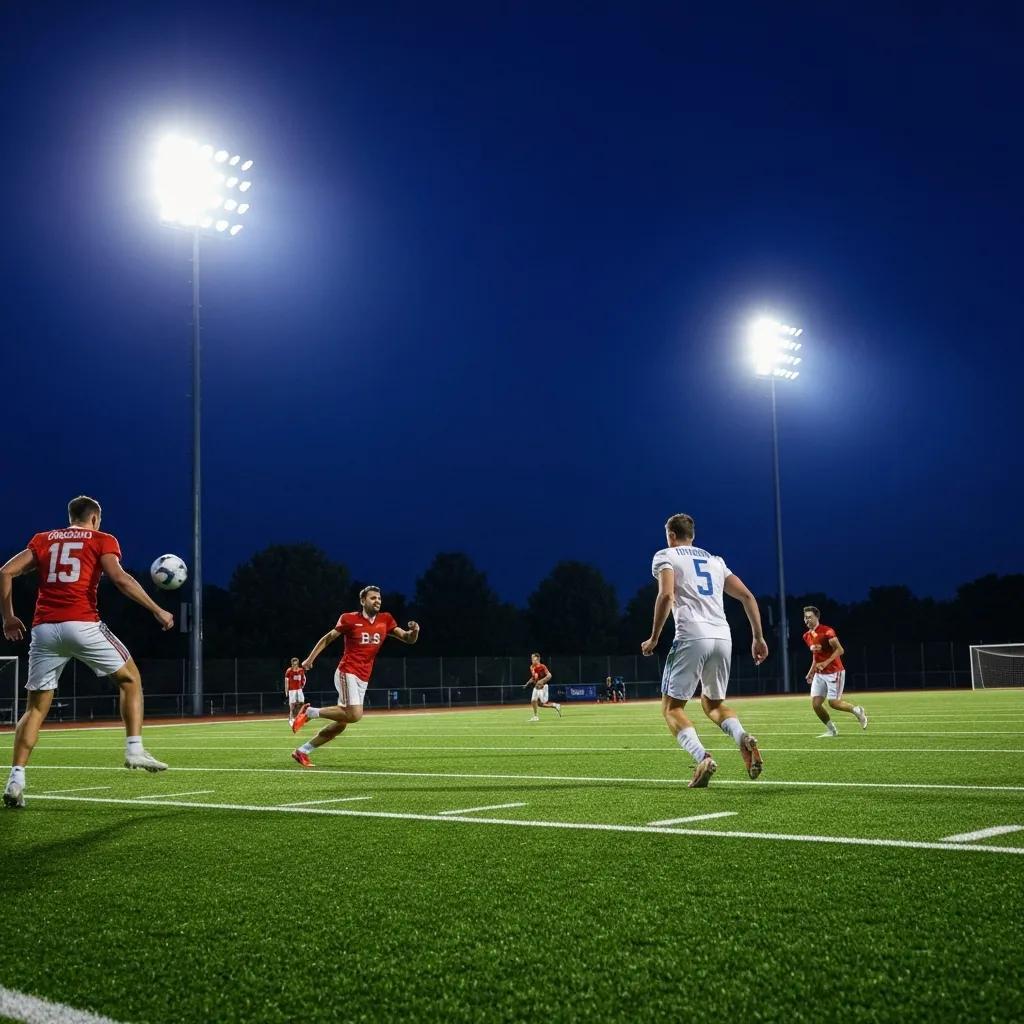
Understanding the Cost Benefits of LED Sports Lighting: Installation, Savings, and ROI for Sports Facilities

Upgrading to LED sports lighting transforms your facility with brighter, more uniform illumination, lower energy bills, and reduced maintenance headaches. Designed for stadiums, courts, and multi-use fields, modern LED systems outperform outdated metal halide setups by delivering the right lux levels with less power and longer-lasting fixtures. Beyond cutting operational costs, LEDs improve visibility, reduce glare, and support advanced controls for smarter, event-ready lighting.
In this guide, we break down the cost of sports lighting solutions, explore energy and maintenance savings, compare retrofit versus new installations, highlight smart control benefits, and outline funding options to help you make confident, ROI-driven decisions for 2025 and beyond.
What Are the Typical Installation Costs for LED Sports Lighting?

LED sports lighting installation costs combine hardware, civil works, electrical labor, controls, and commissioning; fixture counts and pole infrastructure typically drive the largest share. For budgeting, think of cost components as fixtures and optics, poles and foundations, cabling and distribution, control systems, and labor and permits; each contributes differently depending on facility scale and performance requirements. Cost drivers include required lux/uniformity class, pole heights, site civil complexity, scope of controls, and whether existing infrastructure can be reused.
A clear understanding of these components helps stakeholders predict ranges for different facility types and plan contingencies for structural upgrades and permitting. Below is a practical cost comparison by facility type to use as a 2025 benchmark; these ranges assume modern LED fixtures, basic smart controls, and typical installation labor rates for contemporary projects.
Which Factors Influence Sports Field Lighting Installation Costs?
Several discrete factors determine final installation pricing: facility dimensions and target lux/uniformity, fixture choice and lumen output, pole height and foundation needs, trenching/electrical distribution, and the complexity of control systems and photometrics. Facility size and required lux directly affect fixture count. Doubling the target lux often increases fixture and pole requirements significantly, which raises both material and labor costs. Fixture quality and optical distribution influence per-unit cost but can reduce the number of fixtures needed through superior optics. Civil works such as foundation reinforcement or new conduit runs add unpredictable cost, especially on constrained or remote sites. Recognizing these drivers enables more accurate scope definition and helps prioritize investments that reduce lifecycle costs through higher-efficiency optics or integrated controls, which we will examine next.
What Are the Cost Ranges by Sports Facility Type in 2025?
| Facility Type | Typical Installation Cost Range (2025) | Key Cost Drivers / Notes |
|---|---|---|
| Small court (tennis/pickleball) | $9,954 – $230,000 | Fixture count low; pole/foundation costs and targeted optics for uniformity |
| High school field (football/soccer) | $100,000 – $480,000 | Pole heights, number of poles, and basic controls significantly affect cost |
| Collegiate stadium lighting | $200,000 – $800,000+ | Higher lux/uniformity, broadcast requirements, and advanced controls drive cost |
| Professional stadium lighting | $100,000 – $250,000 or more | Broadcast-grade lighting, redundancy, and integrated control/DMX systems add premium |
These ranges show how scope and performance requirements create wide variance; for example, broadcast-grade color rendering and redundancy can push a collegiate project into higher brackets. Comparing these benchmarks allows decision-makers to align project ambitions with realistic budgets and informs retrofit versus new-build tradeoffs discussed later.
For development and marketing clients actively planning upgrades or new facilities, turnkey design and installation services are commonly available to translate these benchmark ranges into detailed project proposals and scoped budgets. Consider engaging a lighting design partner early to produce photometric plans and refined cost estimates that reflect your facility’s unique constraints and objectives.
How Does LED Sports Lighting Deliver Long-Term Energy and Maintenance Savings?
LED sports lighting delivers long-term savings by reducing energy consumption per delivered lumen and extending service intervals through longer rated lifespans, which together lower operational and replacement costs. Modern LED systems can cut energy use substantially by using higher efficacy fixtures, targeted optics, and integrated controls that allow dimming and zoning. This reduces kWh consumption per event and across multi-use schedules. The reduced failure rate and extended rated life (measured in equivalent operating hours) minimize lift time, lamp replacement, and associated labor costs, converting maintenance savings directly into operational budget relief. To quantify these differences and support ROI modeling, the next section provides comparative metrics and example calculations to translate technical advantages into annual dollar savings.
How Much Energy Can LED Sports Lighting Save Compared to Traditional Systems?
LED systems commonly reduce lighting energy consumption by up to 70% compared to older metal halide or HPS systems when paired with appropriate optics and controls.
A simple annual savings calculation uses: fixture kW × hours of operation × days × utility rate = annual kWh cost; switching to LEDs reduces the fixture kW term or allows duty cycling via controls. For example, a 50 kW legacy system operating 300 hours annually at $0.15/kWh costs $2,250 per season; replacing it with an LED system at 18 kW yields $810 per season, saving $1,440 annually. Assumptions such as event hours, seasonal operation, and local utility rates will change outcomes, so project-specific inputs are essential for accurate forecasting. These calculations form the backbone of ROI assessments described later.
How Does LED Lighting Reduce Maintenance and Replacement Costs?
LED fixtures typically offer rated lifespans of 50,000 to 100,000 hours, compared with 6,000–15,000 hours for many traditional lamps, which reduces replacement frequency and associated lift and labor costs substantially. Fewer lamp changes mean fewer expensive bucket-truck hours, lower spare-parts inventory, and reduced disruption to facility schedules for maintenance windows. Additionally, LED drivers and modular fixture designs permit targeted module replacement rather than full fixture swaps in many cases, yielding lifecycle cost advantages. A comparative table below summarizes typical operational attributes and estimated lifecycle impacts to aid total-cost-of-ownership comparisons.
| System Type | Energy Consumption (kW per fixture) | Typical Lifespan (hours) | Maintenance Impact ($/year est.) |
|---|---|---|---|
| Traditional (metal halide) | Higher (example: 1.5–3.0 kW) | 6,000–15,000 | Higher: frequent lamp and ballast replacements |
| LED (typical modern) | Lower (example: 0.4–1.0 kW) | 50,000+ | Lower: fewer service calls and module replacements |
| LED + Controls | Lower with dimming/zoning | 50,000+ | Much lower: automated scheduling reduces runtime and faults |
How Can You Calculate the Return on Investment for Sports Lighting Upgrades?
Return on investment for lighting upgrades can be estimated by comparing the initial installed cost with annualized savings from reduced energy, maintenance, and any performance-related revenue impacts; the core metrics include simple payback, net present value (NPV), and internal rate of return (IRR). A basic ROI formula is: Annual Savings ÷ Initial Investment = Simple Payback (years). To refine that, calculate annual cash flows including incentives and financing costs, then discount future savings to compute NPV and IRR for multi-year comparisons. Sample scenarios using the energy and maintenance assumptions from previous sections illustrate typical payback ranges for small courts up to professional venues, and sensitivity analysis around utility rates and hours of use helps stakeholders understand risk. The next subsections define key metrics and outline how interactive modeling can provide facility-specific answers.
What Key Metrics Should Be Used to Measure Sports Lighting ROI?
Essential metrics include simple payback, NPV, IRR, and levelized cost of lighting. Inputs needed are initial capital cost, annual energy use before and after upgrade, utility rates, maintenance cost differences, incentives, and project lifetime. These metrics help compare financing options, evaluate leasing versus purchase, and prioritize projects. For tailored analysis, ROI tools and expert consultation can model multi-year cashflows and payback, providing actionable insights for facility planning and budgeting.
Is There an Interactive ROI Calculator for Personalized Cost Analysis?
ROI calculators use inputs like facility size, fixture counts, target lux, hours of operation, utility rates, maintenance costs, and rebates to estimate annual savings, payback, and multi-year cash flows. They help compare scenarios, retrofit vs. new install or basic vs. advanced controls, and support funding decisions. Custom calculators incorporating actual photometrics and bids provide the most accurate projections, useful for presentations, budgeting, and securing financing or grants.
When Should Sports Facilities Choose Retrofit vs. New LED Lighting Installation?
Choosing retrofit versus new installation depends on infrastructure condition, performance targets, and long-term strategy: retrofits can reduce upfront costs when poles and wiring are sound, while new installations better serve venues needing higher performance, broadcast readiness, or future-proofing. Retrofitting replaces or upgrades fixtures and controls on existing poles and is often faster with less civil work, making it attractive for budget-constrained or schedule-sensitive projects. New installations include new poles, foundations, and full electrical distribution and are preferable when existing infrastructure is inadequate for target lux/uniformity, or when future expansion and advanced control integration are priorities. The decision matrix below helps managers weigh typical cost ranges, timelines, and pros/cons for each path.
What Are the Advantages of Retrofitting Existing Sports Lighting Systems?
Retrofitting offers lower upfront capital expenditure in many cases, reduced project timelines, and minimized civil works when existing poles, foundations, and conduits remain structurally sound. It also allows facilities to capture immediate energy and maintenance savings with less operational disruption and can be staged across phases to spread the cost. Retrofitting is optimal when photometric goals can be met with modern LED fixtures on existing mounts, avoiding the expense of new pole procurement and foundation work. However, if poles are undersized for upgraded fixture loads or if wiring is aged, retrofit may introduce hidden costs, which is why pre-project structural and electrical assessments are essential to determine true viability.
How Do Retrofit Costs Compare to New Installation Expenses?
| Option | Typical Cost Range | Timeframe | Pros / Cons |
|---|---|---|---|
| Retrofit | 40%–70% of new install cost (varies) | Weeks–Months | Pros: lower upfront cost, faster; Cons: potential hidden structural/electrical upgrades |
| New Installation | Full capital cost as per facility scale | Months–Year+ | Pros: future-proofing, higher performance; Cons: higher upfront cost, more civil works |
When lifecycle costs and performance are modeled together, a new installation can sometimes justify a higher initial expense by delivering superior long-term value, especially for venues with broadcast or high-performance lighting requirements. Comparing the total cost of ownership across realistic time horizons ensures the chosen path aligns with both operational budgets and strategic facility goals.
How Do Smart Lighting Controls Enhance Energy Efficiency and Reduce Operational Costs?
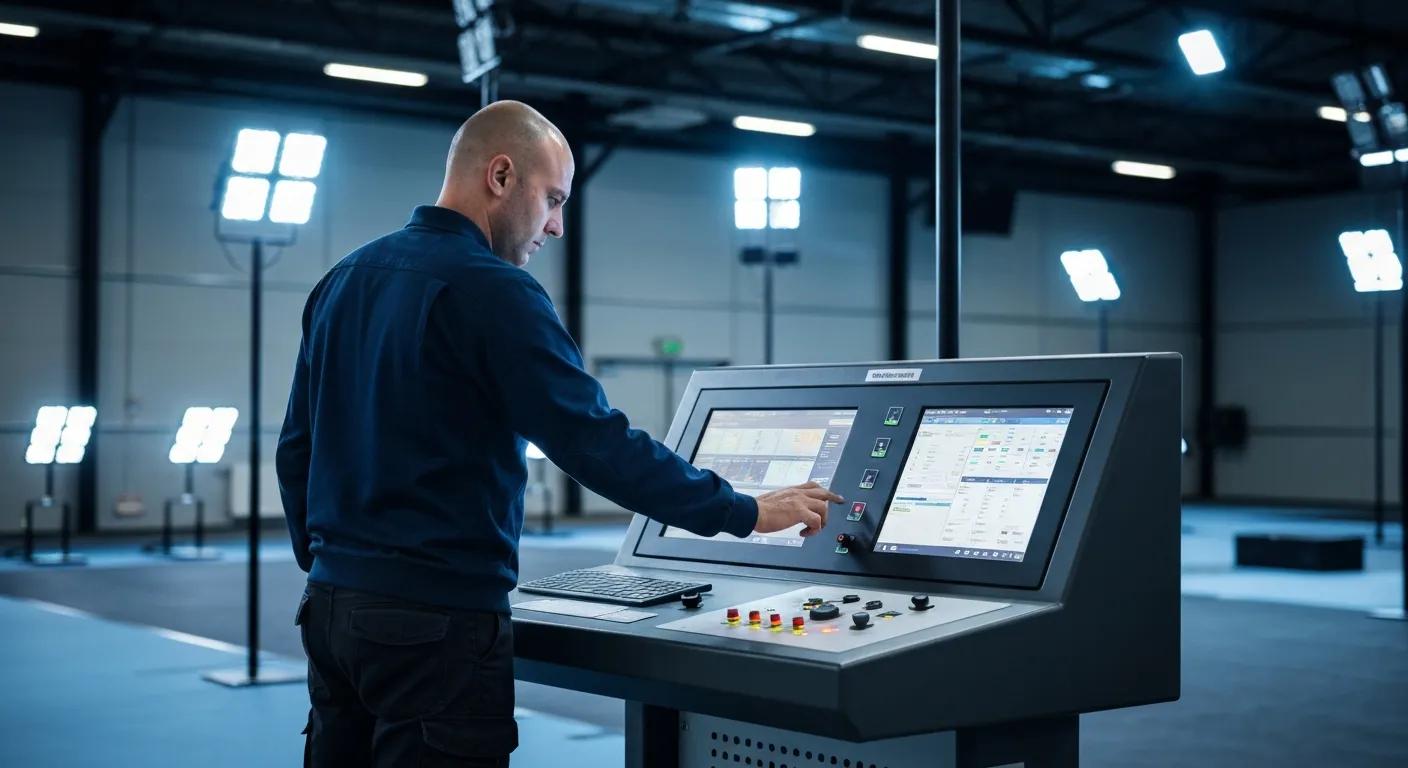
Smart lighting controls add measurable savings by enabling dimming, scheduling, occupancy sensing, and zone control, which reduce run-hours and tailor illumination to actual use cases. Controls also facilitate event-based scenes and remote diagnostics, lowering service response times and enabling predictive maintenance, which reduces operational disruption. Integrating controls with facility management systems enables automated schedules and demand response participation, potentially qualifying projects for additional incentives and lowering peak energy costs. Quantifying incremental savings from controls is essential when modeling ROI because controls often compound fixture-level savings and can shorten payback periods meaningfully. The next subsections detail core control features and their direct impacts on energy and performance.
What Smart Control Features Drive Additional Savings in Sports Lighting?
Core smart control features that deliver savings include dimming schedules, occupancy/motion sensors for multipurpose areas, zone control to light only active areas, and adaptive lighting tied to event needs or broadcast requirements. Dimming schedules can reduce energy use by 10–40% depending on event patterns; occupancy sensors prevent full lighting in rarely used spaces; and zone control prevents lighting unused portions of large fields or courts. Advanced features like wireless node-based control and programmable scenes allow rapid adjustments for practices versus competitions, maximizing energy efficiency without compromising performance. These features not only lower energy bills but also reduce wear on fixtures, further extending lifecycle savings and simplifying operations through centralized management.
How Do Smart Controls Improve Sports Facility Lighting Performance?
Beyond energy savings, smart controls improve uniformity, reduce glare through programmable dimming, and enable scene setting for broadcast or spectator events, producing consistent visual quality and better spectator experience. Remote diagnostics and fault logging accelerate troubleshooting and cut on-site inspection costs by identifying lamps or drivers approaching the end of life before they fail during events. Integrating controls with scheduling systems ensures lights operate only when needed and supports compliance with local ordinances or community agreements about nighttime lighting. Collectively, these operational benefits complement the energy and maintenance savings of LED fixtures and strengthen the business case for upgrades.
What Funding and Financing Options Are Available for Sports Lighting Projects?
- Utility Rebates: Programs that target energy-efficient upgrades, often covering part of the eligible costs if project criteria are met.
- State and Local Grants: Funding from government sources to support community or institutional facility improvements.
- Tax Incentives: Benefits such as energy credits or accelerated depreciation to reduce overall project cost.
- Equipment Financing: Loans or installment plans to spread capital costs over time.
- Leasing: Lease-to-own options for LED fixtures and controls, reducing upfront expenditure.
- Performance Contracting / EPCs: Projects paid from verified energy savings, with some performance risk transferred to the provider.
- Combination Strategies: Using multiple incentives and financing together can make capital costs more manageable and improve affordability.
- Key Consideration: Review eligibility requirements and program rules early to align with institutional procurement and cashflow constraints.
Which Grants and Incentives Support LED Sports Lighting Upgrades?
Typical incentive sources include utility rebates for energy-efficient fixtures and controls, state or local sustainability grants targeting public facilities, and tax advantages where accelerated depreciation or energy credits apply. Utility programs often provide prescriptive or custom rebates based on fixture counts, measured savings, or documented performance; state grants can prioritize community recreation or school upgrades. Eligibility usually depends on project specifications, installer qualifications, and submitted documentation, so early coordination with program administrators and accurate energy savings estimates improves success rates. Checking local utility and municipal energy program offerings is an essential early step in project planning to maximize available external funding.
LED lighting has helped cities like Espoo, Finland, cut energy use significantly. By 2024, nearly half of the city’s luminaires were LEDs, and time-based dimming further reduced consumption. A 25-year life cycle cost analysis shows substantial savings while maintaining reliable performance.
What Are Common Financing and Leasing Strategies for Sports Lighting?
Common options include equipment loans, lease-to-own agreements, energy-as-a-service models, and energy performance contracts. These approaches spread costs over time and can align payments with verified energy savings, reducing upfront budget impact. Early consultation with program administrators or financial advisors helps identify incentives, optimize funding, and ensure cost-effective implementation.
Conclusion
Upgrading to LED sports lighting delivers significant benefits: lower energy use, reduced maintenance, improved field performance, and enhanced visual experience for players and spectators. With careful planning, smart controls, sport-specific design, and strategic financing, Light Disty ensures maximum ROI, making modern LED systems a cost-effective, sustainable solution for any sports facility.