FREE LARGE PROJECT CONSULTATION
CLICK HERE to schedule an appointment with our lighting expert.
5% OFF ANY ORDER Use Code: SUPER5OFF

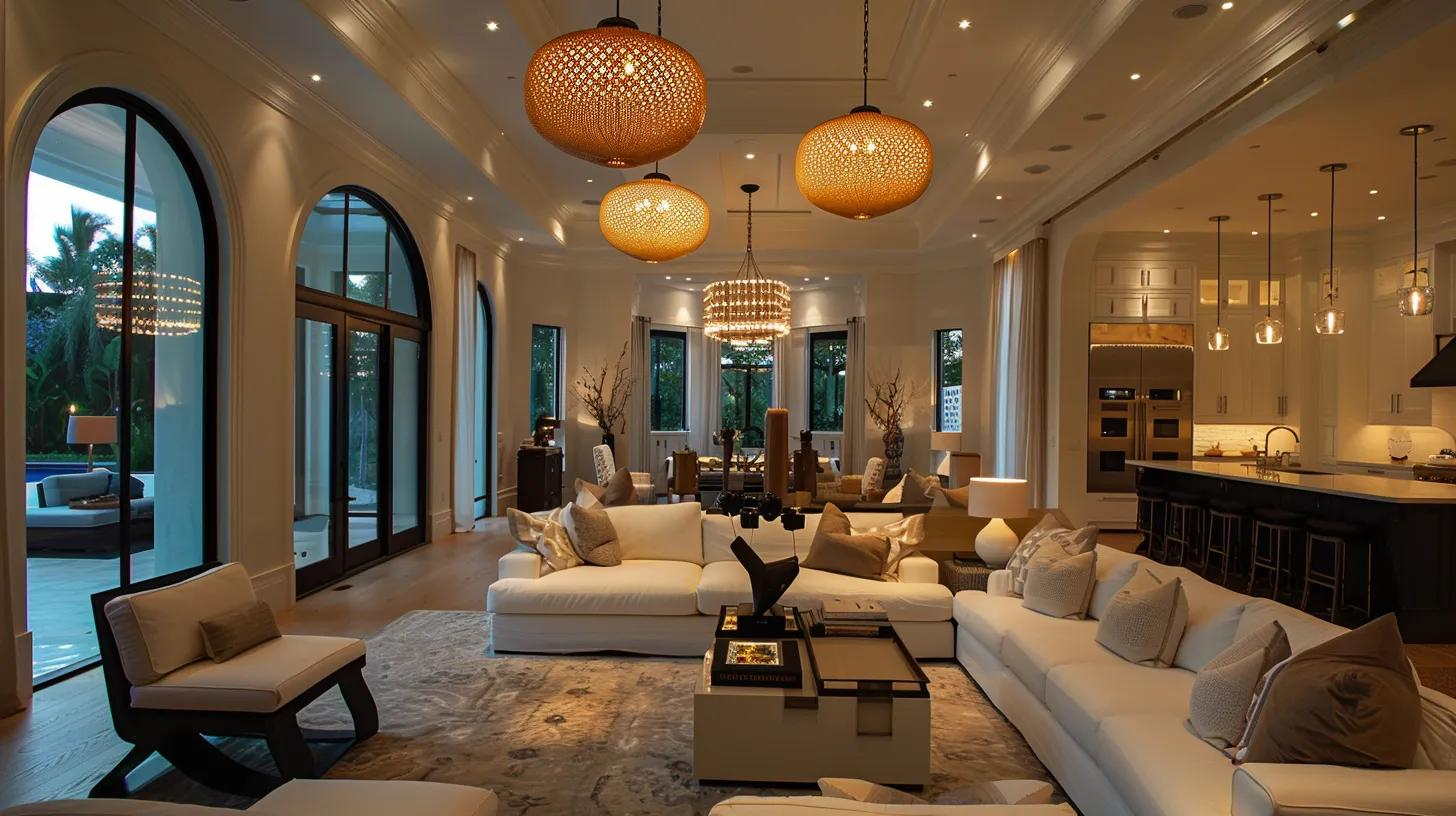
Brighten Your Space With Specialty Decorative Lighting: Unique Fixtures and Custom Design Solutions
Lighting is often the element that determines whether a space feels ordinary or unforgettable. Specialty decorative lighting goes beyond basic illumination by combining sculptural form, material quality, and precise light control to shape atmosphere, highlight architecture, and guide how people move through and experience a space. When done well, it becomes both a visual focal point and a performance asset rather than a purely decorative afterthought.
This guide shows how distinctive fixtures such as chandeliers, sculptural pendants, textured glass sconces, and integrated LED elements elevate interiors and exterior spaces. It covers fixture selection, layered lighting, smart control, and modern LED and OLED technology, along with current trends and sustainable specification choices. The goal is to provide clear, practical guidance for specifying high-impact, performance-driven decorative lighting solutions.
What Are the Best Unique Decorative Lighting Fixtures to Transform Your Space?
Specialty decorative lighting fixtures are purpose-designed lights that combine form and function to become visual focal points while delivering appropriate illuminance and control. They transform a room by defining scale, layering ambient and accent light, and introducing material texture that influences light diffusion and color rendition. Selecting the right fixture balances proportion, ceiling height, and task needs to create a cohesive scheme that supports both aesthetics and performance. Below are the top fixture types that consistently deliver transformative results in interiors and commercial settings.
This list highlights best-in-class fixture types and the primary reason to choose each:
- Chandeliers: Create a central focal point and define circulation or dining zones with layered light.
- Sculptural Pendants: Add vertical drama and sculptural interest over islands or entries.
- Wall Sconces: Provide layered ambient and accent lighting while preserving unobtrusive sightlines.
- Ribbed Glass Pendants: Soften and texture light to add subtle diffusion and vintage appeal.
- Integrated LED Profiles: Deliver linear illumination with clean sightlines for architectural accents.
- Floor and Table Lamps: Offer movable task and accent options that introduce material contrast.
Choosing among these fixtures requires consideration of visual weight and functional output. The next section breaks down which fixture types best enhance particular ambiance and rooms to guide your selection process.
Which Types of Specialty Lighting Fixtures Enhance Ambiance and Style?
Different fixture families serve distinct roles: chandeliers act as anchors in formal spaces, pendants create intimate task zones, and wall sconces build ambient layers for hospitality and corridors. In a luxury dining room, a low-profile chandelier defines the table while dimmable pendants add task clarity; in a boutique lobby, sculptural pendants can provide branding cues and vertical rhythm. Lighting designers select fixtures by matching light distribution, CRI, and scale to the room’s proportions, ensuring a fixture’s luminous intensity complements surfaces and sightlines. Understanding these roles enables precise layering of ambient, accent, and task, which sculpts the perceived depth and texture of a space. The following discussion of materials shows how finish and glass type alter the sensory effect of these fixture families.
How Do Materials and Styles Influence Decorative Lighting Choices?
Materials and finishes directly affect light quality, visual warmth, and long-term maintenance. Warm metals such as brushed brass and bronze reflect softer light and age well, while matte black and forged iron add contrast and architectural presence. Glass selection controls diffusion and glare, with ribbed or opal glass softening light and adding visual texture. Natural materials like rattan or FSC-certified wood support biophilic design but require different care than metal or glass. Designers balance appearance with durability, recyclability, and serviceable LED components to specify fixtures that perform well over time without sacrificing style.
How Can Modern Specialty Lighting Solutions Integrate Technology and Design?

Modern specialty lighting marries LED/OLED modules with smart-home protocols to deliver refined form factors and adaptive control while preserving decorative intent. Integrating technology enables precise color temperature control, dimming curves, and scene-setting that maintain visual comfort and save energy. Thoughtful integration hides drivers and connectors within canopies or extrusions, allowing sculptural fixtures to remain the visual focus while the technology delivers performance. Below is a concise comparison of common light sources and integration capabilities for specification-ready decisions.
| Light Technology | Dimming & Color Control | Smart Protocol Support | Typical Energy Use |
|---|---|---|---|
| Integrated LED Module | Smooth dimming, tunable white | Matter, Thread, Zigbee, Wi-Fi (module-dependent) | Low (5–30 W typical) |
| OLED Panels | Diffuse, low-glare tunable white | Limited direct smart support; often driver-integrated | Very low (10–40 W) |
| Retrofit LED Modules | Dimmable with a compatible driver | Varies by driver (may require gateway) | Moderate to low (10–60 W) |
- Modern integrations preserve sculptural silhouettes while enabling intelligent control.
- LED and OLED systems reduce maintenance and open new fixture geometries.
- Open protocols like Matter and Thread support future-proof interoperability across ecosystems.
What Are the Benefits of LED and Smart Home Integration in Decorative Lighting?
LED and smart integrations bring both practical and design advantages for specialty fixtures: extended lamp life, reduced heat at the shade, and finer color temperature control improve occupant comfort and lower replacement cycles. Scene control enables designers to switch between presentation, hospitality, and security lighting with a single interface, while tunable white LED modules let a fixture shift from warm decorative glow to cooler task light as needed. From a technical perspective, solid-state sources allow smaller lamping components and diffuse panels, enabling thinner profiles and new sculptural shapes that were impossible with traditional filament lamps. These performance gains lead directly to how smart systems enhance functionality and energy efficiency across projects.
How Do Smart Lighting Systems Improve Functionality and Energy Efficiency?
Smart lighting systems deliver automation, presence sensing, and scheduling that reduce runtime and deliver measurable energy savings often in the 20–50% range compared with unmanaged lighting in similar applications. Occupancy and daylight harvesting integrate with scene presets, delivering the right light only when required, while programmable dimming curves preserve material color and luminous comfort. Interoperability through open protocols ensures fixtures remain usable as control ecosystems evolve, minimizing future rewiring or gateway replacements. Together, these capabilities cut operational cost for developers and building operators while improving occupant experience, which supports long-term value and easier specification in commercial projects.
Why Choose Custom Decorative Lighting Design for Luxury Interiors and Commercial Projects?
Custom decorative lighting provides tailored scale, materiality, and brand alignment that off-the-shelf fixtures rarely achieve, producing signature moments that resonate with occupants and prospective buyers. Bespoke fixtures can incorporate branded motifs, meet nonstandard dimensions, and be engineered with serviceable LED modules and replaceable optics for long-term maintenance. For developers and marketing teams, customized lighting becomes a differentiator in sales collateral and experiential spaces by providing unique visuals and better performance data for sustainability reporting. Below is a practical stepwise outline of a typical bespoke project that clarifies deliverables and client touchpoints.
- Brief & Survey: Document spatial constraints, visual goals, and performance requirements.
- Concept & Approval: Present sketches, mood images, and initial photometric targets for sign-off.
- Prototype & Testing: Build mockups or prototypes to verify scale, finish, and light quality.
- Fabrication & Installation: Coordinate manufacturing tolerances, driver placement, and commissioning.
- Handover & Service: Deliver maintenance guides and replaceable component schedules.
What Is the Process for Bespoke Lighting Design and Installation?
A robust bespoke process begins with an in-depth briefing and site survey to collect dimensions, control requirements, and materials context. Design development converts the brief into technical drawings, 3D visualizations, and photometric studies that demonstrate both look and performance. Prototyping and mockups validate finish and light distribution before full production; this phase clarifies lead times and ensures driver and protocol choices meet interoperability needs. During installation, careful coordination with electrical contractors and commissioning of control systems secures scene fidelity and handoff documentation. Clear deliverables at each stage reduce risk and ensure fixtures meet design intent and operational expectations.
How Does Custom Lighting Complement Architectural Styles and Client Visions?
Custom lighting reinforces architectural intent by aligning scale, sightlines, and material language with the surrounding space. Brass and decorative detailing suit classical interiors, while anodized aluminum and clean linear forms complement modern concrete and glass. Designers apply proportion rules such as fixture size relative to room width and drop height versus ceiling height to maintain balance without disrupting circulation. Bespoke fixtures can also carry narrative cues, using textured glass to reference heritage details or linear LED elements to emphasize contemporary geometry. Coordinating finishes with architectural palettes creates visual cohesion and strengthens the overall design story.
For developers and marketing teams, custom lighting adds value beyond aesthetics. Bespoke fixtures generate distinctive visuals and provide measurable performance data such as photometrics and lifecycle metrics, supporting sales materials, branding, and tenant outreach while improving project positioning.
What Are the Top Outdoor Accent Lighting Ideas to Enhance Exterior Spaces?

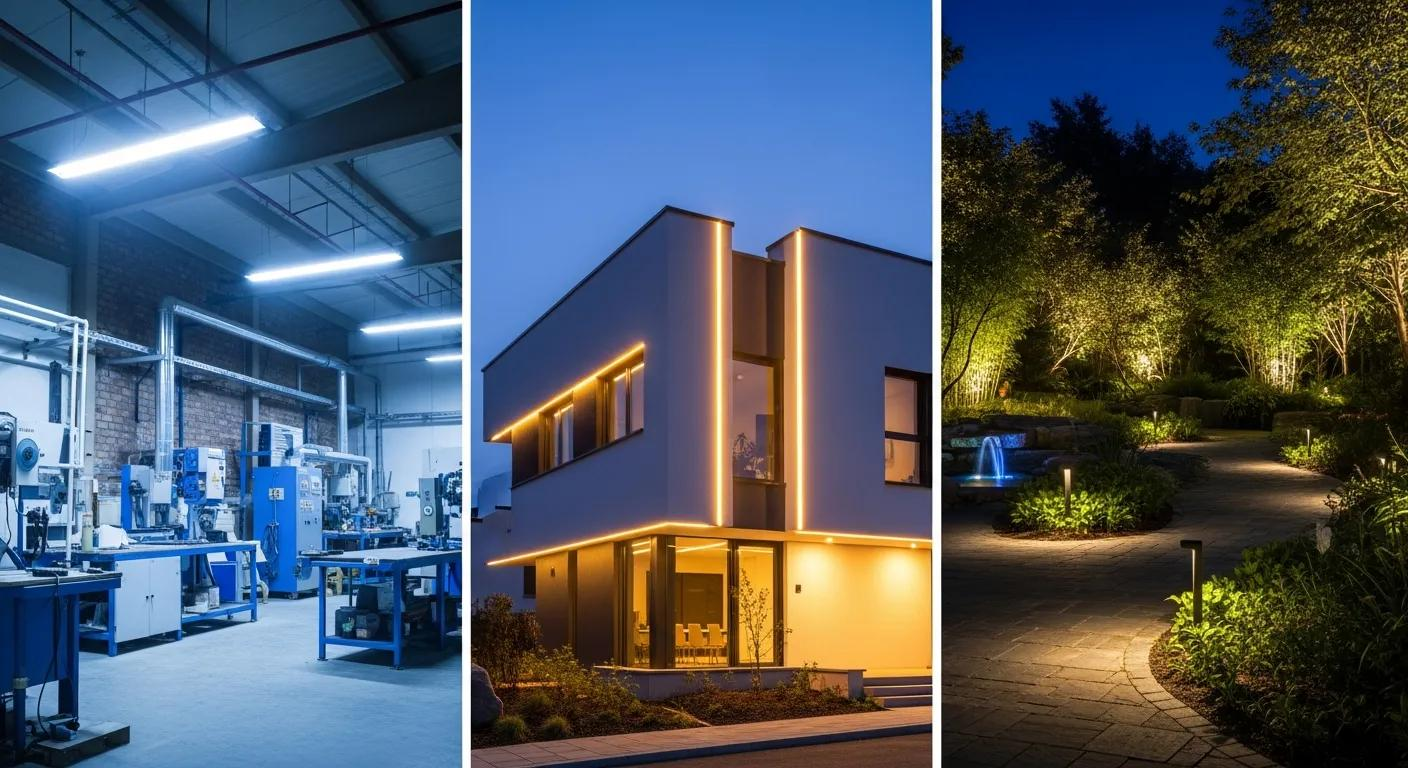
Outdoor accent lighting enhances curb appeal, defines pathways, and highlights architectural and landscape features while requiring attention to IP ratings and durable materials. Effective exterior schemes layer uplighting for trees and facades, path lighting for safety, and wall-wash or step lighting for texture and navigability. Selection must consider ingress protection, corrosion-resistant finishes, and low-glare beam control to maintain neighborly light discipline. The table below compares common outdoor fixture types by application, IP rating, power source, and recommended use-case to guide specification.
| Fixture Type | Key Attribute | Recommended Use |
|---|---|---|
| Path Light | IP65+, low-glare beam | Illuminate walkways and guide circulation |
| Uplight (In-ground) | Flush mount, high IP | Highlight trees and vertical facades |
| Wall Wash | Wide beam, adjustable bracket | Accent masonry and reveal textures |
| Flood Light | Narrow-beam, shielded | Emphasize focal plantings or signage |
| Recessed Step Light | Low-profile, tempered lens | Safety for steps and low-level wayfinding |
Which Specialty Fixtures Are Ideal for Outdoor and Landscape Lighting?
For pathways and residential gardens, low-glare path lights with cutoff optics and warm color temperature (2700–3000K) create welcoming routes and minimize light trespass. In-ground uplights with stainless finishes and tempered glass highlight specimen trees; choose narrow beams for trunk illumination and wider beams for canopy wash. Wall-wash fixtures with adjustable brackets create even illumination across facades while recessed step lights increase safety and add subtle aesthetic detail to terraces and steps. Consider solar-augmented options for remote locations, ensuring battery capacity and expected runtime meet seasonal conditions. Specifying accurate beam angles and IP ratings prevents premature corrosion and helps maintain design intent over time.
How Does Outdoor Accent Lighting Improve Curb Appeal and Safety?
Well-executed exterior lighting increases perceived value by shaping nighttime presentation and improving safety at entry points and along paths. Strategic uplighting and facade washes reveal architectural depth, while evenly spaced pathway lighting reduces trip hazards and improves wayfinding. Using layered intensity brighter task zones with softer ambient fills preserves visual comfort and prevents glare for occupants and neighbors. These interventions also support marketing goals for developments by creating compelling evening curb appeal that photographs well for listings and public spaces, which in turn can influence buyer perception and occupancy rates.
What Are the Latest Trends in Specialty Decorative Lighting for 2025-2026?
Current trends for 2025-2026 emphasize wellness, tactile materials, and adaptable technology that support both experiential design and sustainability objectives. Biophilic materials, mixed metals, ribbed and textured glass, sculptural statement pieces, and cordless rechargeable fixtures are prominent, enabling designers to layer tactile warmth with precise control. These trends also reflect a demand for future-proof smart integration and low-maintenance lighting that aligns with green building narratives. Below is a direct list of trends with succinct descriptions optimized for quick reference.
- Biophilic Elements: Natural materials and organic shapes that promote wellbeing and connect interiors to nature.
- Mixed Metals: Intentional pairing of brass, copper, and matte black to create layered visual depth.
- Ribbed & Textured Glass: Glass that softens and patterns light for distinctive, low-glare diffusion.
- Sculptural Fixtures: Fixtures that function as art objects while providing targeted illumination.
- Cordless Rechargeable Lighting: Flexible fixtures that reduce wiring constraints and support temporary installations.
How Are Biophilic and Vintage Styles Shaping Modern Lighting Designs?
Biophilic and vintage-inspired elements create a sense of comfort and timelessness by incorporating organic textures and warm finishes into modern contexts. Designers rework vintage silhouettes with modern LED modules and replaceable optics to achieve the nostalgic look without sacrificing efficiency or serviceability. Materials like rattan and FSC-certified wood introduce tactile layers, while warm metallic patinas evoke a sense of crafted authenticity, contributing to occupant wellbeing and a softer visual language. These strategies support both residential wellness programming and hospitality interiors that prioritize guest comfort.
What Role Do Mixed Metals, Textured Glass, and Sculptural Fixtures Play?
Mixed metals add dimensionality and intentional contrast, allowing designers to coordinate hardware and lighting finishes across furnishings and architectural elements. Textured and ribbed glass modulates glare and creates signature light patterns that become a space’s visual signature. Sculptural fixtures blur the line between art and utility, enabling lighting to serve as branding or experiential anchors in lobbies and retail environments. Thoughtful mixing of these elements yields layered schemes that read well both in-person and in marketing imagery, reinforcing a project's distinctiveness.
How Can Sustainable and Energy-Efficient Decorative Lighting Benefit Your Projects?
Sustainable decorative lighting reduces operational costs and aligns projects with client values by using recyclable materials, long-life LEDs, and low-loss drivers that minimize energy use and maintenance. Energy-efficient fixtures lower the lifetime cost of ownership and support green building narratives important to investors and tenants. Designers can leverage lifecycle metrics and energy calculations during specification to quantify savings and demonstrate ROI. The table below compares eco-friendly materials and lifecycle attributes to inform procurement and specification decisions.
| Material/Technology | Recyclability & Lifespan | Typical Energy/Performance |
|---|---|---|
| Recycled Metals (brass/copper) | High recyclability; durable lifespans 20+ years | Moderate embodied energy; long service life |
| LED/OLED Modules | Replaceable, long-life 50,000+ hours | Very low operating energy; high efficacy |
| Low-loss Drivers | Serviceable, recyclable casing | Improves overall system efficiency by reducing losses |
| FSC Wood / Natural Fibers | Biodegradable but variable lifespan | Low embodied energy; requires weather treatment for exterior use |
| Solar-augmented Fixtures | Battery recycling considerations | Off-grid energy for remote fixtures reduces mains load |
What Eco-Friendly Materials and Technologies Are Used in Specialty Lighting?
Eco-conscious fixtures combine recycled metals, responsibly sourced woods, and low-VOC finishes with serviceable LED modules and drivers that maximize longevity and reduce replacement waste. Designers specify driver accessibility and modular optics so that components can be replaced rather than discarding entire fixtures. Solar-augmented or low-voltage DC options reduce mains dependency in landscape zones, and selecting products with documented recyclable content simplifies end-of-life planning. These choices reduce embodied carbon and align with broader sustainability targets.
How Do Energy-Efficient Fixtures Align With Modern Design and Client Values?
Energy-efficient decorative lighting aligns with modern design and client values by reducing operating costs, simplifying maintenance, and delivering measurable lifecycle benefits that appeal to investors and eco-conscious occupants. Quantified energy savings and longer replacement intervals strengthen project financials while supporting sustainability narratives. Advances in LED technology and refined materials allow designers to achieve premium aesthetics without sacrificing performance, ensuring visual quality and environmental responsibility work together.
Conclusion
Specialty decorative lighting sits at the intersection of design, performance, and long-term value. When fixtures are specified with the right balance of materials, optics, smart control, and energy efficiency, lighting becomes more than illumination. It becomes a defining architectural and experiential element. From bespoke interior statements to durable outdoor accents, well-planned specialty lighting enhances aesthetics, supports sustainability goals, and strengthens outcomes across residential, commercial, and hospitality projects.
For developers and marketing teams, these decisions translate into stronger visual identity, measurable operational benefits, and more compelling assets for sales and promotion. Light Disty helps ensure design intent is matched with specification-ready products, technical expertise, and lifecycle performance. With the right collaboration, specialty decorative lighting can elevate spaces, improve efficiency, and create lasting value well beyond installation.